



Carriers still have to wait for HHS to certify at least two laboratories before alternative testing method can be used
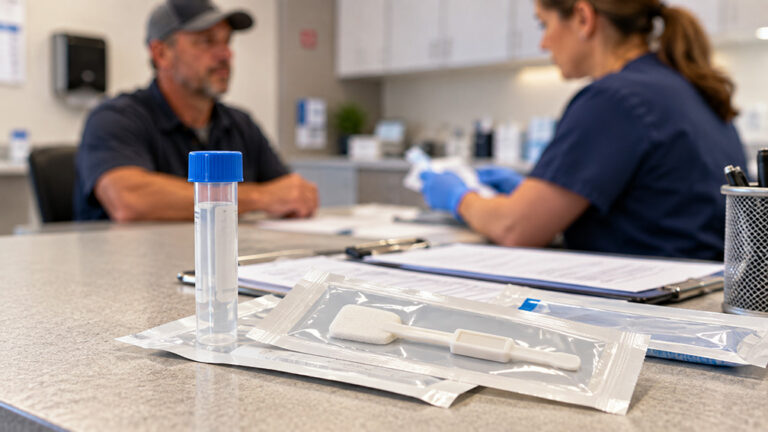
A major roadblock preventing motor carriers from using oral fluid for federally mandated drug testing has been removed.
The U.S. Food and Drug Administration (FDA) on Oct. 6 finalized an order exempting certain clinical toxicology test systems used in federal drug testing programs from the agency’s 510(k) premarket notification requirements.
The change took effect immediately. However, it does not mean trucking companies can begin using oral fluid for Department of Transportation (DOT) drug tests immediately.
U.S. Department of Transportation (DOT) regulations require at least two laboratories to be certified by the Department of Health and Human Services (HHS) to conduct oral fluid testing before employers can use the method.
The FDA action removes an important obstacle to laboratories obtaining that certification.
“This marks the day that oral fluid testing can proceed to market,” said Scott Taillie, chairman of the National Drug and Alcohol Screening Association (NDASA). “For years the science was proven, and the industry was ready, but a regulatory carve-out stood in the way.”
According to Taillie, removing the requirement allows laboratories to move forward with investments and manufacturers to bring testing products to market.
What changed?
Under the FDA’s previous rules, certain Class II clinical toxicology testing systems were already exempt from the 510(k) premarket notification process when intended for employment and insurance testing.
There was an important exception: Test systems intended for federal drug testing programs were not included in that exemption.
The FDA’s Oct. 6 final order removes that exception. As a result, qualifying test systems intended for federal drug testing programs can now be exempt from the 510(k) process, provided they meet the FDA’s other requirements and limitations.
According to the FDA, the change is expected to reduce regulatory burdens and eliminate the time and expense associated with preparing 510(k) submissions for devices covered by the exemption. The agency received comments from approximately 70 commenters after proposing the change in May, with the majority supporting the expanded exemption. FDA finalized the proposal without modification.
The order applies to 14 categories of clinical toxicology test systems, including systems used to detect amphetamines, cocaine and cocaine metabolites, methamphetamine, cannabinoids and opiates.
Removing the premarket notification requirement does not eliminate federal oversight of the testing systems.
According to the FDA, manufacturers remain subject to applicable requirements involving quality management systems, labeling, medical device reporting, establishment registration and device listing. Laboratories conducting federal drug testing also remain subject to HHS requirements administered through the Substance Abuse and Mental Health Services Administration (SAMHSA).
What does this mean for trucking?
DOT authorized oral fluid as an alternative to urine testing in 2023, but implementation has been stalled because no employers can use the method until the required laboratory infrastructure is in place.
Under 49 CFR Part 40, at least two HHS-certified laboratories capable of testing oral fluid specimens must be available before a DOT-regulated employer can use oral fluid testing. One laboratory is needed to test the primary specimen and another must be available for testing the split specimen.
DOT also requires a qualified oral fluid collector and a conforming oral fluid collection device to be available at the collection site. That means urine remains the testing method available to DOT-regulated trucking employers for now.
NDASA says eliminating the FDA requirement clears the way for laboratories to submit applications and begin working toward HHS certification.
“This is what happens when an industry speaks with one voice,” said Jo McGuire, executive director of NDASA. “Our members, our partners and this coalition showed up, made the case and stayed with it.”
McGuire says the association will now focus on working with SAMHSA and DOT to move implementation forward.
Once HHS certifies a second oral-fluid laboratory, DOT regulations provide for an 18-month transition period related to certain directly observed collections. DOT says it will publish a Federal Register notice announcing when that period begins and ends.
For motor carriers, the Oct. 6 FDA order represents an important step toward oral fluid testing — but it’s not the finish line.
The next milestone to watch is HHS certification of the laboratories needed to move DOT oral fluid testing from regulation to actual use.

Linda Garner-Bunch has been with The Trucker since 2020, picking up the reins as managing editor in 2022. Linda has nearly 40 years of experience in the publishing industry, covering topics from the trucking and automotive industry to employment, real estate, home decor, crafts, cooking, weddings, high school sports — you name it, she’s written about it. She is also an experienced photographer, designer and copy editor who has a heartfelt love for the trucking industry, from the driver’s seat to the C-suite.