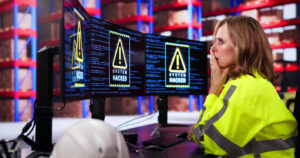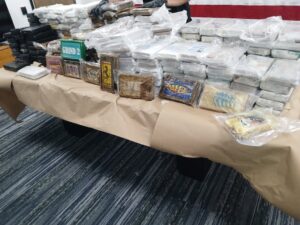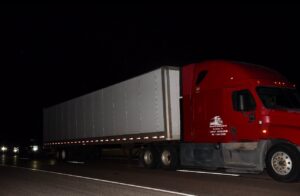





Cargo theft has become an increasingly high-tech operation. The American Transportation Research Institute (ATRI) calculates that cargo theft is costing the trucking industry over $18 million per day.
Strategic theft, a category of crime that uses deception, identity theft and fraudulent documentation to divert freight, has surged by 1,500% since 2021 according to a report by CargoNet.
There have been major developments recently, including the bipartisan Combating Organized Retail Crime Act (CORCA), which was passed by the U.S. House of Representatives on May 12.
At the time of this writing, the groundbreaking bill is on its way to the Senate for consideration before being sent to President Donald Trump to be signed into law.
What Is CORCA?
If passed, CORCA would establish a unified federal response to the growing threat of cargo theft carried out by organized criminal networks that often operate across state and international borders.
The legislation is designed to strengthen federal enforcement against organized retail and supply chain crime by targeting offenses such as the interstate transportation of stolen property, the sale or receipt of stolen goods, and theft from interstate or international shipments when those crimes are committed by, coordinated with or directed by a criminal organization.
CORCA broadens the scope of conduct that qualifies as “offenses” by allowing prosecutions to be based on the aggregate value of stolen items over a 12-month period.
The act would also classify these thefts as “predicate offenses,” meaning they could serve as the underlying crimes needed to pursue federal money laundering charges. In addition, it would allow law enforcement to seize assets and property obtained through the proceeds of those crimes, according to the bill’s summary.
In practical terms, the bill would make it easier for federal authorities to dismantle organized cargo theft rings by adding money laundering charges to qualifying cases and allowing the government to seize assets derived from those crimes, including proceeds funneled through prepaid cards and gift cards.
Finally, the act temporarily establishes a center within the Department of Homeland Security to coordinate federal law enforcement activities related to organized retail and supply chain crime.
Industry Support
CORCA has received widespread support in the freight industry. Jim Mullen, president of the Truckload Carriers Association (TCA) says CORCA will be an ally in the war against cargo theft and fraud.
“CORCA represents an important step in bringing together industry stakeholders, law enforcement and the federal government to develop effective solutions against increasingly sophisticated criminal networks,” he said.
“While this is an initial step, we are encouraged by CORCA’s momentum and look forward to building stronger partnerships, enhancing coordination and creating long-term solutions to better protect supply chains, businesses and consumers nationwide,” he continued.
The American Trucking Associations (ATA) also voiced support for the legislation.
“Cargo thieves are stealing $18 million every day from the trucking industry, and motor carriers and consumers pay the price,” said Chris Spear, ATA’s president and CEO.
“CORCA will give our industry and law enforcement the tools we need to fight back against highly organized, technologically advanced cargo theft rings, which are often orchestrated by transnational criminal groups,” he continued.
Cargo Theft Evolution
Overhaul’s U.S. statistics in 2026’s first quarter Cargo Theft Report recorded 574 incidents across the country — an average of 6.4 per day — and found that even as overall volume dipped, the nature of cargo theft is changing:
Fraud-based schemes are more prevalent, new product categories have emerged as targets, and theft activity spread into regions that haven’t historically been hotspots.
Cargo theft typically slows in the first quarter of the year, because logistics activity dips after the winter holiday season. While that pattern held in the first quarter of 2026, the decline was smaller than expected.
Cargo theft incidents during January-March 2026 fell only 25% from the last quarter of 2025, compared to a 34% drop during the same seasonal window a year earlier.
This gap suggests that while theft volume is easing, risk levels remain elevated.
New Techniques & Targets
Although overall theft volume declined, criminals expanded the variety of tactics they used and the types of products they targeted.
Deceptive pickups — where criminals use fake identities, forged credentials and carrier impersonation to walk away with legitimate loads — rose 31% in the first quarter of 2026 compared to the same time frame of 2025. Nearly half of those incidents occurred in California.
Among product categories, auto and parts saw the sharpest increase with thefts leaping 142% from the last quarter of 2025 and 51% year over year. Electronics remain the most frequently targeted category overall, accounting for 17% of incidents, followed by food and drinks (15%), auto and parts (11%) and clothing and shoes (11%).
“The year-over-year decline is a positive signal, but the risk still remains high and what that risk looks like is changing,” said Barry Conlon, CEO and founder of Overhaul.
“The growth in deceptive pickup schemes tells us that organized networks are investing in fraud infrastructure, and when criminals are forging identities and impersonating carriers, a padlock on a trailer isn’t going to stop them,” he continued. “That’s a threat you have to monitor, verify and catch in real time.”
If passed, CORCA could be a valuable tool in the fight against crime.
This story first appeared in the July/August 2026 print edition of Truckload Authority, the official publication of the Truckload Carriers Association.

Bruce Guthrie is an award-winning journalist who has lived in three states including Arkansas, Missouri and Georgia. During his nearly 20-year career, Bruce has served as managing editor and sports editor for numerous publications. He and his wife, Dana, who is also a journalist, are based in Carrollton, Georgia.