





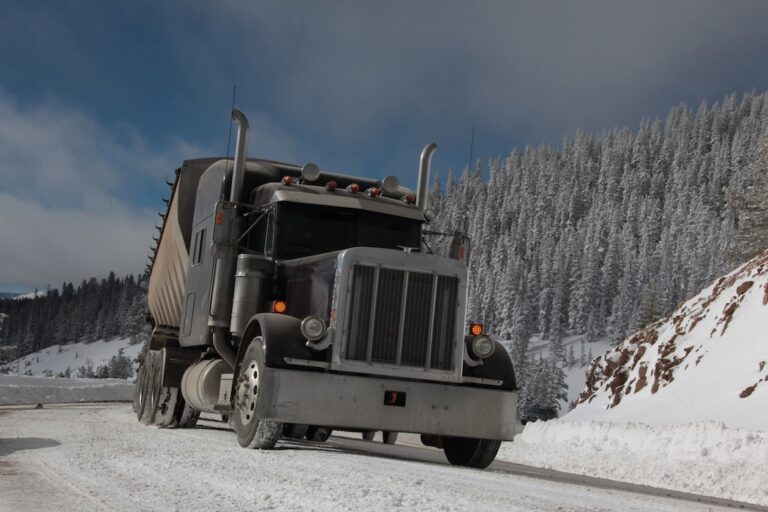
DENVER, Colo. — Winter is already impacting some highways in the state of Colorado, therefore, the Colorado Department of Transportation (CDOT) is reminding commercial vehicle drivers that “Colorado’s chain season is officially underway and safety starts with preparation.”
This is the second year that Colorado’s updated chain law is in effect. The “Must Carry Law,” signed by Gov. Jared Polis in 2024, requires all CMV drivers to carry chains from Sept. 1 to May 31. This applies to vehicles with a combined weight of more than 16,000 pounds used in commerce or as transport for at least 16 passengers (including the driver) on public highways. Failure to comply can result in fines of $500 for not carrying chains and up to $1,000 plus surcharge for blocking the roadway.
For more information on the details of the law and chain-up stations across the state, CDOT has compiled an in-depth fact sheet, hosted on their website.
There are also sections of road where CMVs must carry chains or alternative traction devices (ATDs) regardless of current weather, including sections of I-70, Colorado Highway 9 and US Routes 40, 50, 160, 285 and 550
CDOT says more than 1,300 Must Carry Chain Law citations were issued by law enforcement during the 2024-2025 chain season.
CMV traffic accounts for roughly 10% of vehicles on I-70, with chains helping to reduce roadway closures and delays.
Over 1,400 centerline miles of highway are subject to Colorado’s Must Carry Chain Law.
There are 130 designated chain stations along Colorado’s roadway network. Twenty-two are situated on I-70’s mountain corridor.
Colorado’s mountain highways are uniquely challenging with steep grades, unpredictable weather and heavy snow, and commercial vehicles and buses have a larger footprint on roadways where chains are required. Vehicles without proper traction can cause road closures, impacting the ability to move goods, services and people throughout our state safely. However, chaining up is just one of the steps CMV drivers prepare to safely deliver goods in Colorado winters.
Before starting their routes, CMV drivers check forecasts to adjust schedules around storm systems and ensure that their chains are on board and ready for use. When storms hit, drivers are often required to pull into chain-up stations, many times after dark and in below freezing temperatures.
After chaining, drivers continue to haul over Colorado’s steep grades, at reduced speeds, before stopping again to remove the chains. These added steps are layered with mandated rest requirements and the long hours already demanded by the job. Their efforts keep Colorado’s roads open, freight moving and mountain communities connected, even during the harshest storms.
“For commercial drivers, winter in Colorado requires extra preparation and resilience,” said CDOT’s Freight Mobility and Safety Branch Manager, Craig Hurst. “The Must Carry Law is about ensuring drivers have the tools they need to safely navigate our roads and mountain passes, all while protecting other roadway users.”

Bruce Guthrie is an award-winning journalist who has lived in three states including Arkansas, Missouri and Georgia. During his nearly 20-year career, Bruce has served as managing editor and sports editor for numerous publications. He and his wife, Dana, who is also a journalist, are based in Carrollton, Georgia.



Thank you so much for the time to send me this news. I needed the update. have a good week. Bye.
Suzette M. Angel.